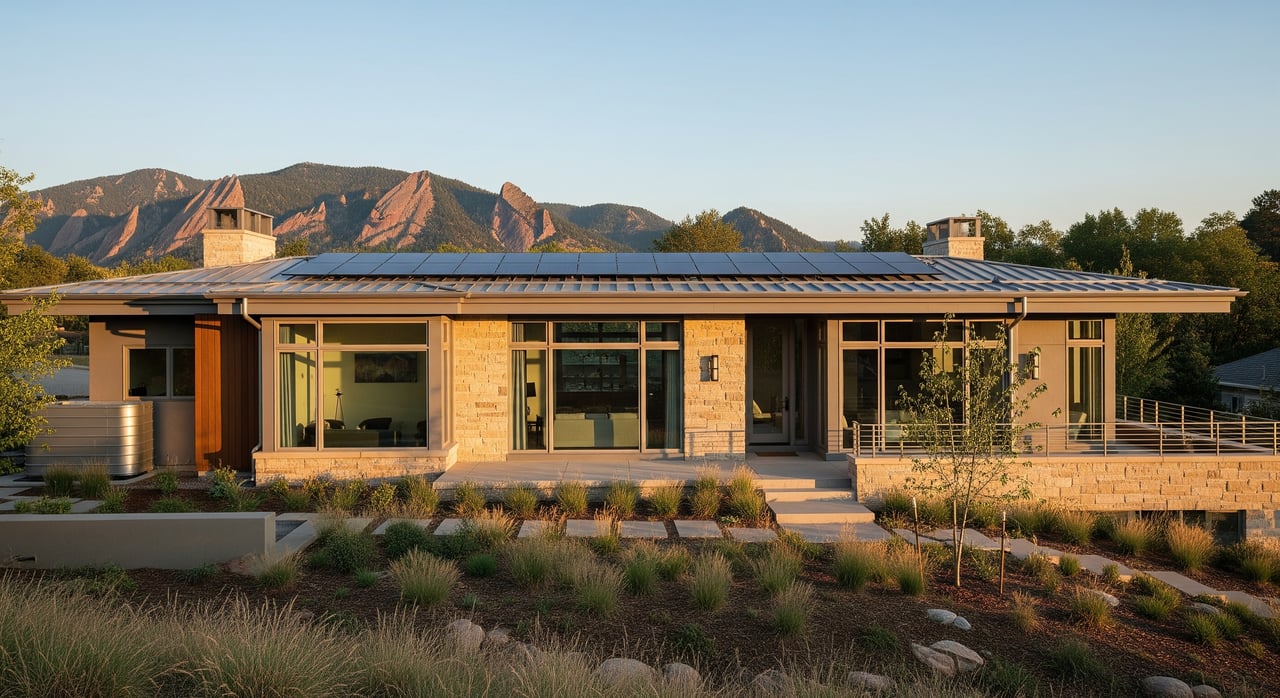
Shopping at the upper end of Boulder County’s market and wondering if your mortgage will be considered “jumbo”? You’re not alone. Many buyers in areas like Mapleton Hill, North Boulder, Louisville, and beyond discover that their ideal home requires financing above the local conforming limit. In this guide, you’ll learn how jumbo loans work, how lenders evaluate applications, what affects rates, and the local factors that can shape your path to closing. Let’s dive in.
Jumbo vs. conforming: check the county limit
A mortgage is considered jumbo when the loan amount exceeds the conforming loan limit for the county. These limits update each year and can vary by location. The easiest way to confirm the current number is to use the Federal Housing Finance Agency’s interactive tool for county conforming loan limits.
What matters is your loan amount, not just the purchase price. Your down payment reduces the loan size, which determines whether your financing is conforming or jumbo. Because many Boulder County homes sell well above national medians, move-up and luxury purchases often cross into jumbo territory. Before you set your budget, verify the county limit and speak with a lender about how your down payment changes your options.
What lenders look for on jumbo loans
Jumbo loans are not purchased by Fannie Mae or Freddie Mac, so lenders use stricter standards to manage risk. Expect tighter guidelines on credit, down payment, reserves, documentation, and the property itself. The Consumer Financial Protection Bureau has helpful mortgage basics if you want a refresher on terminology and process. You can explore the CFPB’s owning a home resources for context.
Credit, down payment, and reserves
- Credit scores: Many jumbo programs favor scores in the 720–760 range for best pricing. Some lenders allow lower scores with pricing adjustments.
- Down payment: A common target is at least 20 percent down for a primary residence, with stronger terms at 20 to 30 percent down depending on your profile.
- Cash reserves: Lenders frequently ask for 6 to 12 months of total housing payments in reserves for primary residences. Second homes or investment properties often require more.
Income, assets, and documentation
- Income verification: Employed buyers typically provide recent pay stubs, W-2s, and tax returns. Self-employed buyers often need two years of returns plus profit and loss statements.
- Asset verification: Expect 2 to 3 months of statements for checking, savings, and investment accounts. Large deposits must be documented.
- Alternative programs: Asset-based or bank-statement programs exist for complex income situations, though they often require larger down payments and higher pricing.
Debt-to-income and mortgage insurance
- Debt-to-income (DTI): Many lenders look for DTI at or below 43 percent for strong files. Compensating factors like a lower loan-to-value or significant reserves can improve flexibility.
- Mortgage insurance: Traditional PMI usually is not available on jumbos. Lenders instead rely on lower LTVs or second-mortgage structures to mitigate risk.
Property and appraisal considerations
- Appraisals: Unique or higher-end homes can require more appraisal time and specialized expertise. Lenders sometimes order review appraisals on luxury properties.
- Condos: Condo projects may need lender approval and a review of HOA documents, budgets, and reserves. Some properties will have stricter LTV caps.
Jumbo rates: how pricing behaves
Historically, jumbo rates have been modestly higher than conforming rates, although the gap can narrow or even invert in certain market cycles. Pricing depends on investor demand, bank balance sheet appetite, and broader bond market trends. For a big-picture view of what mortgage rates are doing nationally, check the Freddie Mac Primary Mortgage Market Survey.
What you can control is your profile and your process. A stronger credit score, a larger down payment, and solid reserves typically help. Compare quotes, including the annual percentage rate (APR) and total closing costs, not just the interest rate. Discuss lock timing with your lender, especially when you are writing offers in a competitive environment.
Boulder County specifics that can affect your loan
Buying in Boulder County means navigating a few local factors that can influence underwriting, appraisal, and insurance.
Appraisals in premium neighborhoods
Mapleton Hill, North Boulder, and other premium micro-markets can have fewer recent comparable sales. Appraisers may need more time to evaluate unique properties or custom finishes. Be prepared for the possibility of review appraisals or additional valuation analysis.
Insurance, wildfire, and flood zones
Lenders require adequate hazard coverage. In foothill-adjacent areas, wildfire risk can influence insurance availability and pricing, and some homes may need mitigation measures. Certain neighborhoods have mapped floodplains or stormwater considerations. You can review county resources for floodplain maps and information. Work with an insurance broker early so you can lock coverage that meets lender requirements.
Property taxes, HOAs, and condo reviews
Property taxes, HOA dues, and special assessments affect your monthly qualification and cash reserve needs. You can explore tax and parcel data through the Boulder County Assessor. If you are purchasing a condo, your lender will review HOA financials and project details. Factors like pending litigation or high investor concentration can require extra documentation or different terms.
Competitive offer dynamics
Boulder attracts relocators, university-connected buyers, and outdoor-focused households. Well-priced listings often see strong interest. A thorough preapproval with verified assets and reserves, plus a clear appraisal and insurance plan, gives you more confidence and credibility when you write.
Your jumbo loan roadmap
Use this simple sequence to reduce surprises and keep your purchase on track.
- Early planning
- Confirm whether your target price and down payment will trigger a jumbo loan.
- Compare lenders that offer portfolio jumbo programs and conventional jumbo options.
- Preapproval
- Complete a full application and provide documentation for income, assets, and reserves.
- Ask for a written preapproval that states your maximum loan amount and any conditions.
- Under contract
- Clarify appraisal timelines and whether a second appraisal might be required.
- Obtain homeowners insurance quotes early and confirm any wildfire or flood requirements.
- For condos, request HOA documents promptly so your lender can start the review.
- Before closing
- Verify your reserves are liquid and seasoned according to lender rules.
- Review and compare your final loan estimate and closing disclosure for APR and total costs.
What to gather: a jumbo documentation checklist
- Two years of federal tax returns and W-2s if applicable
- Recent pay stubs covering at least 30 days
- Two to three months of bank and investment statements
- Documentation for large deposits or gift funds, with gift letters if needed
- Retirement account statements if used for reserves
- Photo ID, fully executed purchase contract, and homeowners insurance quote
- HOA documents for condo purchases
Final thoughts
Jumbo loans are common in Boulder County, and with the right preparation they can be straightforward. Confirm your county loan limit, understand what drives approval and pricing, and line up appraisal and insurance timelines early. With a clear plan, you can compete confidently for the home you want.
If you are considering a move in Boulder County and want a tailored financing and offer strategy, let’s connect. Unknown Company is here to help you compare options, coordinate trusted lender introductions, and navigate your next purchase with calm, local expertise.
FAQs
What is a jumbo loan in Boulder County?
- A jumbo loan is any mortgage with a loan amount above the FHFA’s conforming limit for Boulder County, which you can verify using the FHFA’s county loan limit tool.
How much down payment do jumbo lenders usually require?
- Typical minimums for primary residences are 15 to 20 percent, with stronger pricing and terms often available at 20 to 30 percent down depending on your profile.
Are jumbo loan rates much higher than conforming rates?
- Not always. The spread changes with market conditions and borrower strength, and well-qualified buyers often receive competitive rates relative to conforming options.
What documents will I need for a jumbo preapproval?
- Expect full income and asset documentation, including recent pay stubs, W-2s or tax returns, and 2 to 3 months of account statements, with clear sourcing for large deposits.
How do wildfire or flood risks affect jumbo financing in Boulder?
- Lenders require adequate hazard coverage, and some properties may need wildfire or flood insurance; check Boulder County’s floodplain resources and consult your insurance broker early.
Where can I learn more about the mortgage process?
- The Consumer Financial Protection Bureau offers plain-language guides and tools at its owning a home resource hub.